FULL PRESCRIBING INFORMATION
1 INDICATIONS AND USAGE
BioThrax is a vaccine indicated for the active immunization for the prevention of disease caused by Bacillus anthracis in persons 18 through 65 years of age.
1.1 BioThrax is approved for pre-exposure prophylaxis of disease in persons whose occupation or other activities place them at high risk of exposure.
1.2 BioThrax is approved for post-exposure prophylaxis of disease following suspected or confirmed Bacillus anthracis exposure, when administered in conjunction with recommended antibacterial drugs.
The efficacy of BioThrax for post-exposure prophylaxis is based solely on studies in animal models of inhalational anthrax.
2 DOSAGE AND ADMINISTRATION
For intramuscular or subcutaneous injection only.
2.1 Dose
Each dose is 0.5 mL.
|
Pre-Exposure Prophylaxis: |
||
|
Schedule |
Route of Administration |
Dosing Schedule |
|
Primary Series |
Intramuscular |
0,1, and 6 months |
|
Booster Series |
Intramuscular |
6 and 12 months after completion of |
In persons who are at risk for hematoma formation following intramuscular injection, BioThrax may be administered by the subcutaneous route. The pre-exposure prophylaxis schedule for BioThrax administered subcutaneously is 0, 2, 4 weeks, and 6 months with booster doses at 6 and 12 months after completion of the primary series and at 12-month intervals thereafter.
The optimal schedule for catch up of missed or delayed booster doses is unknown. [See Clinical Studies (14)]
|
Post-Exposure Prophylaxis: |
||
|
Schedule |
Route of Administration |
Dosing Schedule |
|
Primary Series |
Subcutaneous |
0, 2, and 4 weeks post-exposure combined |
2.2 Administration
Shake the vial thoroughly to ensure that the suspension is homogeneous during withdrawal. Parenteral drug products should be inspected visually for particulate matter and discoloration prior to administration, whenever solution and container permit. If either of these conditions exists, do not administer the vaccine.
Administer pre-exposure prophylaxis vaccinations intramuscularly into the deltoid muscle. If pre-exposure prophylaxis requires subcutaneous administration, administer over the deltoid muscle. Administer post-exposure prophylaxis vaccinations subcutaneously over the deltoid muscle.
Do not mix with any other product in the syringe.
3 DOSAGE FORMS AND STRENGTHS
BioThrax is a suspension for injection (0.5 mL dose) in 5 mL multidose vials. See Description (11) for the complete listing of ingredients.
4 CONTRAINDICATIONS
Do not administer BioThrax to individuals with a history of anaphylactic or anaphylactic-like reaction following a previous dose of BioThrax or any component of the vaccine, including aluminum, benzethonium chloride, and formaldehyde. [See Description (11).]
5 WARNINGS AND PRECAUTIONS
5.1 Hypersensitivity Reactions
Acute allergic reactions, including anaphylaxis, have occurred with BioThrax. Appropriate medical treatment and supervision must be available to manage possible anaphylactic reactions following administration of the vaccine. [See Contraindications (4)]
5.2 Latex
The stopper of the vial contains natural rubber latex and may cause allergic reactions to patients with a possible history of latex sensitivity. [See How Supplied/Storage and Handling (16)]
5.3 Pregnancy
BioThrax can cause fetal harm when administered to a pregnant woman. If this drug is used during pregnancy, or if the patient becomes pregnant while taking this drug, the patient should be apprised of the potential hazard to a fetus. Weigh the potential benefits of vaccination against the potential risk to the fetus. [See Use in Specific Populations (8.1)]
Pregnant women should not be vaccinated against anthrax unless the potential benefits of vaccination have been determined to outweigh the potential risk to the fetus. Results of a large observational study that examined the rate of birth defects among 37,140 infants born to U.S. military service women who received anthrax vaccine in pregnancy between 1998 and 2004 showed that birth defects were slightly more common in first trimester-exposed infants (odds ratio = 1.18, 95% confidence interval: 0.997, 1.41) when compared with infants of women vaccinated outside of the first trimester and compared to unvaccinated women.¹ While the increased birth defect rates were not statistically significant when compared with infants born to women vaccinated outside of pregnancy, pregnant women should not be vaccinated against anthrax unless the potential benefits of vaccination have been determined to outweigh the potential risk to the fetus.
5.4 History of Anthrax Disease
History of anthrax disease may increase the potential for severe local adverse reactions.
6 ADVERSE REACTIONS
The most common (≥10%) local (injection-site) adverse reactions observed in clinical studies were tenderness, pain, erythema, edema, and arm motion limitation. The most common (≥5%) systemic adverse reactions were muscle aches, headache, and fatigue.
6.1 Clinical Trials Experience
Because clinical trials are conducted under widely varying conditions, adverse reaction rates observed in the clinical trials of a product cannot be directly compared to rates in the clinical trials of another product and may not reflect the rates observed in clinical practice.
Pre-Exposure Prophylaxis
In an open-label safety study of 15,907 doses of BioThrax administered by the subcutaneous route to approximately 7,000 textile employees, laboratory workers and other at risk individuals, local and systemic reactions were monitored. Over the course of the 5-year study the following local adverse reactions were reported: 24 (0.15% of doses administered) severe local adverse reactions (defined as edema or induration measuring greater than 120 mm in diameter or accompanied by marked limitation of arm motion or marked axillary node tenderness), 150 (0.94% of doses administered) moderate local adverse reactions (edema or induration greater than 30 mm but less than 120 mm in diameter), and 1,373 (8.63% of doses administered) mild local adverse reactions (erythema only or induration measuring less than 30 mm in diameter). Four cases of systemic adverse reactions were reported during the 5-year reporting period (<0.06% of doses administered). These reactions, which were reported to have been transient, included fever, chills, nausea, and general body aches.
In a randomized, double-blinded, placebo-controlled, and active-controlled multi-center clinical study, 1,564 healthy subjects were enrolled. The objective of this study was to evaluate the effect of (1) changing the route of vaccine administration from subcutaneous (SC) to intramuscular (IM), and (2) of reducing the number of doses on the safety and immunogenicity of BioThrax. The dosing schedules and routes studied are provided in Table 1. [See Clinical Studies (14)]
Group A (8SC) (N=259) received BioThrax via the SC route of administration at Weeks 0, 2, 4, and Months 6, 12, 18 followed by 2 annual boosters (original U.S. licensed route/schedule). Group A served as the active control in this study.
Group B (8IM) (N=262) received BioThrax via the IM route of administration at Weeks 0, 2, 4, and Months 6, 12, 18 followed by 2 annual boosters.
Group C (COM) (N=782) received BioThrax via the IM route of administration at Weeks 0, 4 (no Week 2 dose), and Month 6 with various schedules thereafter. (Group C represents data from 3 randomized groups [Groups D, E, and F] combined for the analysis through Month 7 because the schedules are identical through the Month 6 dose.)
Group D (7IM) (N=256) received BioThrax via the IM route of administration at Weeks 0, 4 (no Week 2 dose), and Months 6, 12, 18 followed by 2 annual boosters.
Group E (5IM) (N=258) received BioThrax via the IM route of administration at Weeks 0, 4 (no Week 2 dose), and Months 6, 18 followed by 1 booster dose at Month 42 (2 year interval).
Group F (4IM) (N=268) received BioThrax via the IM route of administration at Weeks 0, 4 (no Week 2 dose), and Month 6 followed by 1 booster dose at Month 42 (3 year interval).
| SC: subcutaneous; IM: intramuscular; V: vaccine, S: saline | ||||||||
| a Active Control. | ||||||||
| b Subjects randomized to the control group were then re-randomized (1:1) to receive saline by the IM or SC route. The IM and SC placebo groups are combined in analyses. | ||||||||
|
Table 1: Vaccination Schedules and Routes Evaluated |
||||||||
|
Group/Route |
Weeks |
Months |
||||||
|
0 |
2 |
4 |
6 |
12 |
18 |
30 |
42 |
|
|
Group A (8SC)a |
V |
V |
V |
V |
V |
V |
V |
V |
|
Group B (8IM) |
V |
V |
V |
V |
V |
V |
V |
V |
|
Group D (7IM) |
V |
S |
V |
V |
V |
V |
V |
V |
|
Group E (5IM) |
V |
S |
V |
V |
S |
V |
S |
V |
|
Group F (4IM) |
V |
S |
V |
V |
S |
S |
S |
V |
|
Placebob |
S |
S |
S |
S |
S |
S |
S |
S |
Subjects were instructed to complete a 14-day post-vaccination diary card after the first 2 doses and a 28 day diary card after the subsequent doses to capture solicited and unsolicited adverse reactions. Adverse reaction data were also collected from in-clinic exams, which were performed prior to, and 15 to 60 minutes after each injection, at 1 to 3 days after each injection for the first two injections, and at 28 days after injections 3 through 8. The mean age, gender ratio, and race distribution were not significantly different across treatment groups among the vaccinated cohort (N=1563). The mean age was 39 years (range 18 to 62 years). Fifty-one percent of participants were female and 49% were male. Seventy-four percent were white, 21% were black and 5% were categorized as “other”.
Shown in Table 2 are the rates (percentage) of prospectively defined local and systemic solicited adverse reactions observed in the in-clinic exams for doses 1-4 as well as the rates (percentage) of local and systemic solicited adverse reactions observed in the in-clinic exams for doses 5-8.
Analysis of injection site (local) adverse reactions by study group was performed after each dose. It was observed that groups receiving BioThrax by the IM route had a statistically significantly lower incidence (p ≤ 0.05) of any (one or more) local adverse reactions compared to the BioThrax SC route, by dose in the in-clinic data set, in 23 out of 24 analyses. (This excludes doses where IM groups received a placebo.) Individual injection site adverse reactions occurring at statistically significantly lower frequencies (p ≤ 0.05) in participants given BioThrax by the IM route included warmth (in all analyses), tenderness (in 19 out of 24 analyses), itching (in 22 out of 24 analyses), erythema (in all analyses), induration (in all analyses), edema (in 20 out of 24 analyses), and nodule (in all analyses). However, by dose, the incidences of arm motion limitation were comparable or higher in each BioThrax IM group compared to the 8SC group, with statistically significantly higher incidences (p ≤ 0.05) observed in 10 out of 24 analyses. The incidence of any moderate or severe local adverse reactions was lower in BioThrax IM groups, compared to the 8SC group after each dose. Route of administration did not affect the occurrence of systemic adverse reactions, with the exception of muscle ache (increased incidence in the BioThrax IM groups after most doses). There was no pattern for differences in the incidence of any moderate or severe systemic adverse reactions for BioThrax IM groups compared to the 8SC group after each dose. The proportion of participants with severe local or systemic adverse reactions reported by adverse reaction category after each dose was very low (generally <1%).
Overall, women had a higher incidence of any local adverse reaction than did men, by dose, within BioThrax groups, regardless of the route of administration. Overall, women also had a higher incidence of any systemic adverse reaction than men, within BioThrax groups, regardless of the route of administration. A brief pain or burning sensation, felt immediately after vaccine injection, and distinct from injection site pain, was reported by 45 - 97% of all study participants receiving BioThrax. Reporting frequency and event intensity varied with route of administration and vaccine dose. Up to 11% of subjects rated the brief pain or burning they experienced immediately after vaccine injection as 8 out of 10 or greater. Female participants generally experienced a higher pain scale rating than male participants.
Eight serious adverse events (SAEs) were reported with 6 subjects and determined to be possibly related to the administration of BioThrax: (1) a case of generalized allergic reaction, (2) a case of ANA positive autoimmune disorder manifesting as a moderate bilateral arthralgia of the metacarpophalangeal (MCP) joints, (3) a right shoulder supraspinatus tendon tear, (4) a case of bilateral pseudotumor cerebri with bilateral disc edema, (5) a case of generalized seizure and hospitalization for evaluation of hydrocephalus and endoscopic fluid ventriculostomy, (6) a case of bilateral ductal carcinoma of the breast. No SAEs were determined by the investigator to be probably or definitely related to administration of BioThrax. The percent of serious adverse events was similar between the BioThrax combined groups (193/1303 or 15%) and the placebo group (38/260 or 15%).
Fifty-one pregnancies were reported in this study, 33 of which occurred in women who received BioThrax as their last dose prior to conception and 18 in women who received placebo as their last dose prior to conception. Pregnancy outcomes where BioThrax was given within 30 days prior to conception (n=5) were 3 full-term live births (including 1 healthy term infant with a mild right clubbed foot abnormality), 1 spontaneous abortion, and 1 first trimester intra-utero fetal death. Pregnancy outcomes in the placebo group (n=5) were 4 full-term live births (including one with bilateral congenital hip dysplasia) and 1 elective abortion.
| a Per-dose, statistical assessment performed on Intent-to-Treat population data. Evaluations performed at 15-60 minutes and 1-3 days following each injection and prior to the next scheduled injection. | |||||||||||||||||||||||||||||||||
| b Subjects received saline (instead of BioThrax) for the Week 2 dose. Placebo dose data for 7IM group is in italics. | |||||||||||||||||||||||||||||||||
| c The two saline groups (SC and IM) were combined. | |||||||||||||||||||||||||||||||||
| d N is the highest number per treatment arm (received at least one dose); denominator (N) varied with dose number due to attrition over time. | |||||||||||||||||||||||||||||||||
| e Moderate = causes discomfort and interferes with normal daily activities; Severe = incapacitating and completely prevents performing normal daily activities. This is based on the local AE categories of warmth, tenderness, itching, pain, and arm motion limitation. | |||||||||||||||||||||||||||||||||
| f Large = an occurrence of induration, erythema, edema, nodule, and bruise with a largest diameter greater than 120 mm. | |||||||||||||||||||||||||||||||||
| g Moderate = causes discomfort and interferes with normal daily activities; Severe = incapacitating and completely prevents performing normal daily activities. This is based on the systemic AE categories of fatigue, muscle ache, headache, and fever. | |||||||||||||||||||||||||||||||||
|
Table 2: Adverse Reactions: In-Clinic Day 0 – 3, Solicited by Dose Numbera |
|||||||||||||||||||||||||||||||||
|
STUDY GROUP |
|||||||||||||||||||||||||||||||||
|
Group D
|
Placeboc
|
Group A
|
|||||||||||||||||||||||||||||||
|
Number of Subjects (N)d |
256 |
260 |
259 |
||||||||||||||||||||||||||||||
|
Dose |
Dose |
Dose |
|||||||||||||||||||||||||||||||
|
1 |
2b |
3 |
4 |
5 |
6 |
7 |
8 |
1 |
2 |
3 |
4 |
5 |
6 |
7 |
8 |
1 |
2 |
3 |
4 |
5 |
6 |
7 |
8 |
||||||||||
|
% |
% |
% |
% |
% |
% |
% |
% |
% |
% |
% |
% |
% |
% |
% |
% |
% |
% |
% |
% |
% |
% |
% |
% |
||||||||||
|
Local Adverse Reactions |
|||||||||||||||||||||||||||||||||
|
Presence of any local |
60 |
23 |
68 |
68 |
69 |
77 |
76 |
73 |
22 |
22 |
19 |
27 |
25 |
29 |
25 |
18 |
81 |
89 |
80 |
84 |
81 |
84 |
84 |
92 |
|||||||||
|
Warmth |
4 |
1 |
8 |
10 |
11 |
13 |
14 |
19 |
1 |
0 |
0 |
0 |
0 |
0 |
1 |
1 |
29 |
41 |
32 |
39 |
34 |
40 |
51 |
49 |
|||||||||
|
Tenderness |
46 |
7 |
51 |
47 |
41 |
44 |
44 |
48 |
6 |
8 |
7 |
10 |
6 |
7 |
7 |
4 |
64 |
72 |
48 |
65 |
53 |
57 |
61 |
63 |
|||||||||
|
Itching |
1 |
0 |
2 |
4 |
7 |
7 |
7 |
10 |
0 |
0 |
0 |
0 |
1 |
0 |
0 |
0 |
3 |
16 |
23 |
20 |
17 |
22 |
25 |
26 |
|||||||||
|
Pain |
16 |
4 |
20 |
15 |
16 |
13 |
16 |
15 |
4 |
2 |
3 |
4 |
4 |
2 |
3 |
2 |
16 |
22 |
12 |
19 |
16 |
14 |
18 |
20 |
|||||||||
|
Arm motion limitation |
14 |
1 |
15 |
11 |
10 |
10 |
15 |
9 |
1 |
0 |
2 |
1 |
1 |
1 |
1 |
0 |
8 |
12 |
5 |
11 |
10 |
5 |
8 |
5 |
|||||||||
|
Erythema |
15 |
10 |
20 |
30 |
35 |
48 |
40 |
37 |
11 |
12 |
7 |
13 |
14 |
17 |
14 |
11 |
53 |
64 |
57 |
65 |
64 |
64 |
68 |
71 |
|||||||||
|
Induration |
7 |
7 |
12 |
16 |
21 |
23 |
15 |
17 |
1 |
3 |
2 |
3 |
4 |
4 |
3 |
3 |
26 |
35 |
28 |
40 |
38 |
36 |
38 |
35 |
|||||||||
|
Edema |
5 |
2 |
11 |
20 |
15 |
23 |
30 |
25 |
3 |
4 |
4 |
4 |
4 |
7 |
8 |
5 |
17 |
33 |
31 |
33 |
31 |
35 |
37 |
46 |
|||||||||
|
Nodule |
3 |
0 |
4 |
5 |
8 |
9 |
6 |
5 |
0 |
2 |
0 |
1 |
2 |
0 |
2 |
0 |
39 |
42 |
36 |
26 |
26 |
23 |
21 |
27 |
|||||||||
|
Bruise |
5 |
4 |
5 |
3 |
2 |
4 |
3 |
2 |
4 |
5 |
1 |
4 |
3 |
5 |
5 |
4 |
6 |
7 |
6 |
6 |
3 |
6 |
5 |
6 |
|||||||||
|
Presence of any |
5 |
1 |
8 |
7 |
4 |
5 |
6 |
4 |
0 |
0 |
0 |
0 |
0 |
0 |
0 |
0 |
7 |
16 |
8 |
13 |
10 |
7 |
12 |
14 |
|||||||||
|
Presence of any large local |
0 |
0 |
0 |
2 |
2 |
4 |
2 |
2 |
0 |
0 |
0 |
0 |
0 |
0 |
0 |
0 |
0 |
1 |
4 |
2 |
1 |
2 |
2 |
4 |
|||||||||
|
Systemic Adverse Reactions |
|||||||||||||||||||||||||||||||||
|
Presence of any systemic |
18 |
12 |
24 |
19 |
15 |
19 |
10 |
9 |
10 |
10 |
13 |
11 |
13 |
8 |
13 |
4 |
16 |
20 |
18 |
21 |
18 |
14 |
20 |
17 |
|||||||||
|
Fatigue |
9 |
4 |
12 |
10 |
9 |
11 |
4 |
6 |
5 |
4 |
7 |
7 |
8 |
5 |
10 |
3 |
9 |
12 |
8 |
12 |
12 |
10 |
10 |
13 |
|||||||||
|
Muscle ache |
8 |
4 |
13 |
6 |
5 |
5 |
3 |
5 |
2 |
2 |
3 |
4 |
5 |
3 |
1 |
1 |
5 |
8 |
4 |
5 |
4 |
3 |
9 |
5 |
|||||||||
|
Headache |
6 |
6 |
9 |
7 |
8 |
8 |
5 |
4 |
4 |
6 |
5 |
4 |
7 |
4 |
6 |
1 |
7 |
9 |
8 |
11 |
7 |
5 |
9 |
2 |
|||||||||
|
Fever >100.4°F |
0 |
0 |
0 |
0 |
0 |
0 |
0 |
0 |
0 |
0 |
0 |
0 |
1 |
0 |
0 |
0 |
0 |
0 |
0 |
0 |
0 |
0 |
0 |
0 |
|||||||||
|
Tender/painful axillary |
0 |
0 |
0 |
1 |
1 |
1 |
0 |
0 |
0 |
0 |
0 |
0 |
0 |
0 |
0 |
1 |
0 |
1 |
2 |
1 |
1 |
0 |
1 |
0 |
|||||||||
|
Presence of any |
2 |
2 |
6 |
3 |
3 |
5 |
4 |
3 |
1 |
2 |
2 |
1 |
3 |
1 |
2 |
1 |
2 |
5 |
4 |
3 |
3 |
2 |
3 |
2 |
|||||||||
Solicited and unsolicited adverse reactions observed from Day 0 through month 43 at a higher frequency (by at least 5%) in the BioThrax groups (IM and SC) as compared to the placebo (P) group were: headache (70.4% IM, 78.4% SC, 68.1% P); myalgia (72% IM, 76.1% SC, 50% P); and fatigue (70.1% IM, 76.8% SC, 60.8% P).
Post-Exposure Prophylaxis
A phase 3, open-label, uncontrolled, multi-center study evaluated the three-dose post-exposure prophylaxis BioThrax schedule (Week 0, 2, and 4) in 200 healthy adult subjects. The most common solicited adverse reactions reported 7 days after each vaccination comprised local reactions, including symptoms of lump, tenderness, and erythema. The most common solicited systemic reactions comprised fatigue, headache, and myalgia. Of the subjects that reported local and systemic solicited reactions, ≥ 98% required minimal or no treatment and resulted in little to no interference with subjects’ daily activity. The most common (> 2.0%) unsolicited related adverse reactions reported following at least one dose up to 100 days after the third dose were: headache (4.0%), fatigue (3.5%), skin hyperpigmentation (3.5%), decreased joint range of motion (2.5%), myalgia (2.5%). No deaths were reported and neither of the two SAEs reported were considered to be related to vaccination. There were no pregnancies reported or subject withdrawals from the study due to adverse events.
6.2 Postmarketing Experience
The following adverse events have been reported spontaneously. Since these events are reported voluntarily from a population of uncertain size, it is not always possible to reliably estimate their frequency or establish a causal relationship to drug exposure. The reports included below are listed due to one or more of the following factors: (1) seriousness of the event, (2) number of reports, or (3) strength of causal relationship to the drug.
- •
- Blood and lymphatic system disorders
- Lymphadenopathy
- •
- Gastrointestinal Disorders
- Nausea
- •
- Immune system disorders
- Allergic reactions (including anaphylaxis, angioedema, rash, urticaria, pruritus, erythema multiforme, anaphylactoid reaction, and Stevens Johnson syndrome)
- •
- Nervous system disorders
- Paresthesia syncope, dizziness, tremor, ulnar nerve neuropathy
- •
- Musculoskeletal, connective tissue, and bone disorders
- Arthralgia, arthropathy, myalgia, rhabdomyolysis, alopecia
- •
- General disorders and administration site conditions
- Malaise, pain, cellulitis, flu-like symptoms
- •
- Psychiatric disorders
- Insomnia
- •
- Skin and Subcutaneous disorders
- Pruritis, rash, urticaria
- •
- Vascular disorders
- Flushing
Infrequent reports were also received of multisystem disorders defined as chronic symptoms involving at least two of the following three categories: fatigue, mood-cognition, and musculoskeletal system.
7 DRUG INTERACTIONS
7.1 Ciprofloxacin
Co-administration of 0.5 mL BioThrax SC with oral ciprofloxacin in human subjects did not alter the pharmacokinetics of ciprofloxacin or the immunogenicity of BioThrax as measured by the anthrax lethal toxin neutralization assay. [See Clinical Studies (14.3)]
7.2 Concomitant Administration with Other Vaccines
The safety and efficacy of concomitant administration of BioThrax with other licensed vaccines has not been evaluated.
BioThrax should not be mixed with any other vaccine in the same syringe or vial. If BioThrax is to be given at the same time as another injectable vaccine(s), the vaccine(s) should be administered at different injection sites.
8 USE IN SPECIFIC POPULATIONS
8.1 Pregnancy
Pregnancy Category D. [See Warnings and Precautions (5.3)]
Healthcare practitioners are encouraged to register women who receive BioThrax during pregnancy in Emergent’s vaccination pregnancy registry by calling 1-619-553-9255.
Male Fertility: A retrospective study was performed at an in-vitro fertilization clinic to evaluate whether BioThrax may impact reproductive function in men. This study compared semen parameters, embryo quality, and pregnancy outcomes in 254 male clients who stated that they had received BioThrax, with those of 791 male clients who did not.² Prior receipt of BioThrax did not influence semen parameters (including concentration, motility, and morphology), fertilization rate, embryo quality or clinical pregnancy rates.
8.3 Nursing Mothers
It is not known whether BioThrax is excreted in human milk. Because many drugs are excreted in human milk, caution should be exercised when BioThrax is administered to a nursing woman.
11 DESCRIPTION
BioThrax® (Anthrax Vaccine Adsorbed) is a sterile, milky-white suspension for intramuscular or subcutaneous injections made from cell-free filtrates of microaerophilic cultures of an avirulent, nonencapsulated strain of Bacillus anthracis. The production cultures are grown in a chemically defined protein-free medium consisting of a mixture of amino acids, vitamins, inorganic salts, and sugars. The final product, prepared from the sterile filtrate culture fluid contains proteins, including the 83kDa protective antigen (PA) protein, released during the growth period and contains no dead or live bacteria. The final product is formulated to contain 1.2 mg/mL aluminum, added as aluminum hydroxide in 0.85% sodium chloride. The final product is formulated to contain 25 mcg/mL benzethonium chloride and 100 mcg/mL formaldehyde, added as preservatives.
12 CLINICAL PHARMACOLOGY
12.1 Mechanism of Action
Anthrax is a zoonotic disease caused by the Gram-positive, spore-forming bacterium Bacillus anthracis. BioThrax induces antibodies raised against PA that may contribute to protection by neutralizing the activities of the cytotoxic lethal toxin and edema toxin of Bacillus anthracis.³ Bacillus anthracis proteins other than PA may be present in BioThrax, but their contribution to protection has not been determined.
13 NONCLINICAL TOXICOLOGY
The effect of BioThrax on embryo-fetal and pre-weaning development was evaluated in a developmental toxicity study using pregnant rabbits. One group of rabbits was administered BioThrax twice prior to gestation and during the period of organogenesis (gestation day 7). A second group of rabbits was administered BioThrax twice prior to gestation and on gestation day 17. BioThrax was administered at 0.5 ml/rabbit/occasion, by intramuscular injection. No adverse effects on mating, fertility, pregnancy, parturition, lactation, embryo-fetal or pre-weaning development were observed. There were no vaccine-related fetal malformations or other evidence of teratogenesis noted in this study.
13.2 Animal Pharmacology
Since it is not feasible or ethical to conduct controlled clinical trials with anthrax, the efficacy of BioThrax in a post-exposure setting is based on studies in animals. Pre-exposure prophylaxis animal models were used to derive protective antibody thresholds to bridge animal efficacy and human immunogenicity data and predict efficacy in humans.
Pivotal efficacy animal studies were conducted in rabbits and nonhuman primates (NHPs). Animals received two IM vaccinations four weeks apart with serial dilutions of BioThrax and were subjected to lethal challenge on study day 70 with aerosolized B. anthracis spores at a target dose exceeding the 50% lethal dose by 200-fold. Serum samples were collected at various time points prior to challenge for immune response analysis via anthrax lethal toxin neutralizing antibody (TNA) assay. The relationship between pre-challenge serum TNA levels and survival was evaluated. Logistic regression analysis demonstrated that a 70% probability of survival was associated with a TNA NF50 (50% neutralization factor) level of 0.56 in rabbits and 0.29 in NHPs.
The ability of BioThrax to increase survival after the cessation of the post-exposure antimicrobial treatment, as compared with antimicrobial treatment alone, was investigated in two post-exposure animal model studies. In these studies, rabbits were challenged via inhalation with aerosolized B. anthracis spores and subsequently treated with levofloxacin administered via oral gavage once daily for 7 days starting at 6-12 hours post-exposure, with or without two intramuscular injections of BioThrax one week apart. Survival among animals that received both antimicrobial treatment and vaccination was between 70 – 100% and increased in a vaccine dose-dependent manner. In contrast, only 44% and 23% survival was observed among animals that received antimicrobial treatment only in the first and the second study, respectively (p < 0.0006 and p < 0.004, respectively). [See Clinical Studies (14.2)]
14 CLINICAL STUDIES
14.1 Pre-Exposure Prophylaxis
A controlled field study using an earlier version of a protective antigen-based anthrax vaccine developed in the 1950’s and supplied by G. G. Wright and associates of the U.S. Army Chemical Corps, Fort Detrick, Frederick, MD, that consisted of an aluminum potassium sulfate-precipitated cell-free filtrate from an aerobic culture, was conducted from 1955-1959.⁴ This study included 1,249 workers [379 received anthrax vaccine, 414 received placebo, 116 received incomplete inoculations (with either vaccine or placebo) and 340 were in the observational group (no treatment)] in four mills in the northeastern United States that processed imported animal hides. The anthrax vaccine was administered subcutaneously at 0, 2, 4 weeks, 6, 12, 18 months. Prior to vaccination, the yearly average number of human anthrax cases (both cutaneous and inhalational) was 1.2 cases per 100 employees in these mills. During the trial, 26 cases of anthrax were reported across the four mills – 5 inhalation and 21 cutaneous. Of the five inhalation cases (four of which were fatal), two received placebo and three were in the observational group. Of the 21 cutaneous cases, 15 received placebo, three were in the observational group, and three received anthrax vaccine. Of those three cases in the vaccine group, one case occurred just prior to administration of the scheduled third dose, one case occurred 13 months after an individual received the third of the scheduled 6 doses (but no subsequent doses), and one case occurred prior to receiving the scheduled fourth dose of vaccine. The calculated efficacy of the vaccine to prevent all types of anthrax disease, regardless of the route of exposure or clinical manifestations, was 92.5% (lower 95% Confidence Interval (CI) = 65%).
Between 1962 and 1974, the Centers for Disease Control and Prevention (CDC) collected surveillance data on the occurrence of anthrax disease in mill workers or those living near mills in the United States.⁵,⁶ In that time period, individuals received either BioThrax or the earlier protective antigen-based anthrax vaccine used in the field trial described above. Of the 27 reported cases of anthrax, 24 cases occurred in unvaccinated individuals. In vaccinated individuals one case occurred after the person had been given one dose of anthrax vaccine and two cases occurred after individuals had been given two doses of anthrax vaccine. No documented cases of anthrax were reported for individuals who had received at least three doses of the originally licensed six-dose series of anthrax vaccine.
Between 2002 and 2007, a prospective double-blinded, randomized, placebo-controlled and active-controlled study was conducted to evaluate the impact on safety and immunogenicity on changing the administration route from SC to IM, and reducing the number of doses. This study enrolled 1,564 healthy civilian men and women between the ages of 18 and 61. A total of 1,563 subjects received at least one dose (one subject withdrew consent prior to the first injection). Subjects were randomized to one of six groups. See Table 1.
Using an Enzyme-Linked Immunosorbent Assay (ELISA), Immunoglobulin G (IgG) antibodies directed against anthrax protective antigen (PA) were measured at the Week 8 and Months 7, 13, 19, 31, and 43 time points. The three primary immunogenicity endpoints were: (1) Geometric Mean Concentration (GMC) (mcg/mL), (2) Geometric Mean Titer (GMT), and (3) percentage with 4-fold rise in anti-PA antibody titer from baseline.
The criteria for non-inferiority of comparisons based on ratios of GMCs and GMTs and differences in the rates of 4-fold rise in antibody titer were defined as follows:
Mean antibody concentration ratio: non-inferiority was achieved when the upper bound of the 95% confidence limit was < 1.5
Mean antibody titer ratio: non-inferiority was achieved when the upper bound of the 95% confidence limit was < 1.5
4-fold rise in antibody titer: non-inferiority was achieved when the upper bound of the 95% confidence limit was < 0.10
To compare the originally licensed 6-dose SC schedule (0, 2, 4 weeks and 6, 12, and 18 months) versus a 3-dose IM primary series (at 0, 1, and 6 months), non-inferiority analyses were performed for all three primary immunogenicity endpoints. This evaluation compared the immune response at Month 7 for Group C (COM, where COM is Combined, as described in 6.1) to Month 19 for Group A (TRT-8SC, where TRT is Treatment) and Group B (TRT-8IM). Non-inferiority was demonstrated for all analyses (See Table 3). These results support a 3 dose primary series of BioThrax administered IM at 0, 1 and 6 months, followed by booster doses at 12 and 18 months and at 1-year intervals thereafter to maintain protective immunity.
The Month 7 antibody levels of Group A (TRT-8SC) were non-inferior to Month 13 and 19 antibody levels after a 0, 2, 4 week and 6 month primary SC series followed by SC booster injections at 12 and 18 months (see Table 3). These results support a 4 dose SC primary series of BioThrax administered at weeks 0, 2, 4, and at 6 months followed by booster doses at 12 and 18 months after initiation of the series, and at 1-year intervals thereafter to maintain protective immunity.
-
Catch-up Administration for Delayed or Missed Doses
In subjects who did not receive booster doses at 12, 18, and 30 months, PA antibody levels decline over time following the third dose of BioThrax administered intramuscularly at 6 months (Group F; 4IM; 0, 1, 6, and 42 months). In the absence of booster doses it is not known whether these individuals are adequately protected between 12 months and receipt of a booster dose at 42 months. One month following a dose of BioThrax at 42 months the immune response for Group F met the criteria for non-inferiority relative to Group A (8SC) for all three primary immunogenicity endpoints (see Table 3). The optimal schedule for further intramuscular booster doses among persons administered a single booster dose at 42 months following completion of a three-dose primary series at 0, 1, and 6 months is not known.
| CI: Confidence Interval; | |||||||
| a According to Protocol (ATP): [NCT00119067] To be included in the ATP population at a particular timepoint, a participant must have: (a) received all injections up through that timepoint, (b) received these injections within the windows defined by protocol, (c) received the correct agent administered by the correct route according to subject's assigned study arm, (d) received the correct injection volume. A shot of 0.3 mL or greater is considered valid. | |||||||
| b Groups TRT-7IM, -5IM, and -4IM combined as group TRT-COM (combined) through Month 7 of the study, GMC: geometric mean concentration. GMT: geometric mean titer. IM: Intramuscular; SC: Subcutaneous, TRT: treatment. | |||||||
|
Table 3: Primary Immunogenicity Endpoints (According to Protocola) |
|||||||
|
Week 4 |
Week 8 |
Month 7 |
Month 13 |
Month 19 |
Month 31 |
Month 43 |
|
|
Anti-PA Specific IgG GMC, mcg/mL |
|||||||
|
n |
n |
n |
n |
n |
n |
n |
|
|
TRT-8SC |
242 |
235 |
219 |
203 |
190 |
167 |
144 |
|
TRT-7IMb
|
723 |
698 |
636 |
203 |
192 |
169 |
139 |
|
TRT-5IMb
|
399 |
174 |
153 |
141 |
|||
|
TRT-4IMb
|
193 |
179 |
157 |
||||
|
Anti-PA Specific IgG GMT |
|||||||
|
n |
n |
n |
n |
n |
n |
n |
|
|
TRT-8SC |
242 |
235 |
219 |
203 |
190 |
167 |
144 |
|
TRT-7IMb
|
723 |
698 |
636 |
203 |
192 |
169 |
139 |
|
TRT-5IMb
|
399 |
174 |
153 |
141 |
|||
|
TRT-4IMb
|
193 |
179 |
157 |
||||
|
4-fold response |
|||||||
|
n |
n |
n |
n |
n |
n |
n |
|
|
TRT-8SC |
242 |
235 |
219 |
203 |
190 |
167 |
144 |
|
TRT-7IMb
|
723 |
698 |
636 |
203 |
192 |
169 |
139 |
|
TRT-5IMb
|
399 |
174 |
153 |
141 |
|||
|
TRT-4IMb
|
193 |
179 |
157 |
||||
14.2 Post-Exposure Prophylaxis
Based on the rabbit model-derived TNA threshold [See Nonclinical Toxicology (13.2)], a pivotal clinical study was conducted to evaluate the immunogenicity and safety of a post-exposure SC administration schedule of BioThrax in healthy adults following 3 doses at 0, 2, and 4 weeks. Two hundred subjects were enrolled and followed for 128 days. The primary objective was to assess immunogenicity using TNA following the completion of three SC doses of BioThrax. The primary immunogenicity endpoint was the proportion of subjects achieving a threshold TNA NF50 value ≥0.56 at Day 63, 5 weeks after the third vaccination. Success was concluded if the lower bound of the 2-sided 95% CI of the proportion of human subjects achieving the TNA NF50 threshold was ≥ 40%.
Overall, 71.2% of subjects achieved an NF50 value ≥0.56 on Day 63 in the pivotal study. The lower bound of the 95% CI was 64.1% (See Table 4.)
In a separate analysis of the pivotal clinical study using the threshold associated with a 70% probability of survival in NHPs, 93.5% of subjects achieved an NF50 value ≥0.29 on Day 63 (Table 4). The lower bound of the 95% CI was 88.9% (Table 4). The bridging of human immunogenicity data to the NHP study was supportive of the primary analysis comparing human threshold data with rabbit survival. [See Nonclinical Toxicology (13.2)]
| CI = confidence interval; NF50 = 50% neutralization factor; PP = per protocol; SD = standard deviation; TNA = toxin-neutralizing antibody. | ||||||||
| Note: Sample size (N) and denominators used for percentages are based on the number of subjects meeting the PP criteria at specified day(s). | ||||||||
| a TNA NF50 threshold is defined as the TNA NF50 value associated with 70% survival in the animal challenge studies. | ||||||||
| b Human data are from the pivotal clinical study (NCT01491607). | ||||||||
| c A logistic regression model with log10-transformed TNA NF50 values as the predictor and survival as the response is used to derive the TNA NF50 threshold associated with 70% probability of survival in rabbits and non-human primates, respectively. | ||||||||
| d 95% CI is calculated with the exact (Clopper-Pearson) method. | ||||||||
| e The proportion of subjects achieving a TNA NF50 response at Day 63 that met or exceeded the TNA NF50 threshold in the rabbit model at Day 69 comprised the primary immunogenicity endpoint. | ||||||||
| fComparison of the human TNA NF50 response at Day 63 with the NHP TNA NF50 threshold at Day 70 was defined as an immunogenicity endpoint and was supportive of the bridging of human immunogenicity data to rabbit survival. | ||||||||
|
||||||||
|
Animal
|
Time Point
|
n |
Human
|
Animal
|
Number
|
Proportion of Subjects
|
||
|
Point
|
95% CI (%) |
|||||||
|
Lower
|
Upper
|
|||||||
|
Rabbite |
Day 63/Day 69 |
184 |
0.86 |
0.56 |
131 |
71.2 |
64.1 |
77.6 |
|
Non-human |
Day 63/Day 70 |
184 |
0.86 |
0.29 |
172 |
93.5 |
88.9 |
96.6 |
14.3 Non-Interference of Post-Exposure Prophylaxis Vaccination and Antimicrobials When Used Concurrently
An open-label study was conducted to evaluate the potential impact 0.5 mL BioThrax administered SC at 0, 2 and 4 weeks had on the pharmacokinetics of ciprofloxacin in healthy adult male and female subjects (N=154). It also evaluated the potential impact of ciprofloxacin on immunogenicity of BioThrax two weeks following the last BioThrax dose.
Co-administration of 0.5 mL BioThrax SC with oral ciprofloxacin in human subjects did not alter the pharmacokinetics of ciprofloxacin or the immunogenicity of BioThrax as measured by the anthrax lethal toxin neutralization assay.
15 REFERENCES
- 1.
- Ryan MA, Smith TC, Sevick CJ, Honner WK, Loach RA, Moore CA, Erickson JD. 2008. Birth defects among infants born to women who received anthrax vaccine in pregnancy. Am J Epidemiol, 168:434-442.
- 2.
- Catherino WH, Levi A, Kao TC, Leondires MP, McKeeby J, Segars JH. 2005. The anthrax vaccine does not affect semen parameters, embryo quality, or pregnancy outcome in couples with a vaccinated male military service member. Fertility and Sterility, 83:480-483
- 3.
- Brachman P, Friedlander A, Grabenstein J. 2008. Anthrax Vaccine. In: Vaccines, Fifth Edition, Plotkin, S.A.: Orenstein W.A. and Offit P.A. (eds.), 111-126
- 4.
- Brachman, PS, Gold H, Plotkin SA, Fekety FR, Werrin M, Ingraham NR. 1962. Field evaluation of a human anthrax vaccine. Amer. J. Public Health, 52:632-645.
- 5.
- Food and Drug Administration, 2005, Biological Products; Bacterial Vaccines and Toxoids; Implementation of Efficacy Review; Anthrax Vaccine Adsorbed; Final Order. FDA Federal Register 2005; 70(242): 75180-75198.
- 6.
- Food and Drug Administration. Biological Products; Bacterial vaccines and toxoids; Implementation of efficacy review. Federal Register (December 13, 1985), 50(240):51002-51117.
16 HOW SUPPLIED/STORAGE AND HANDLING
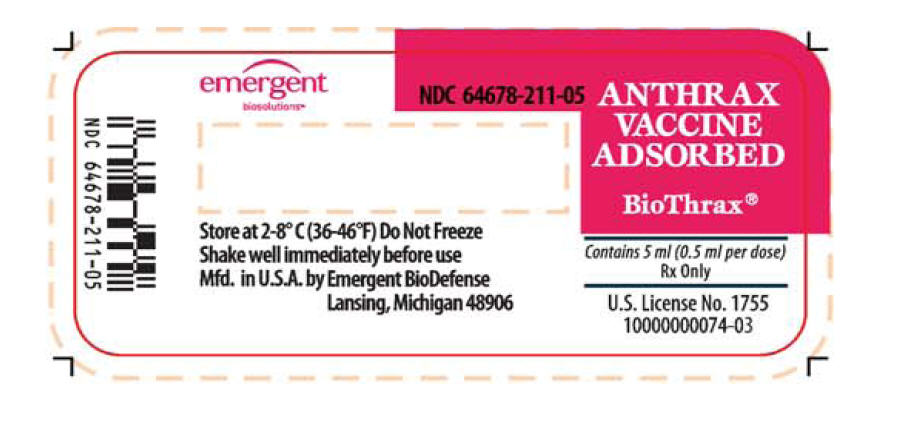
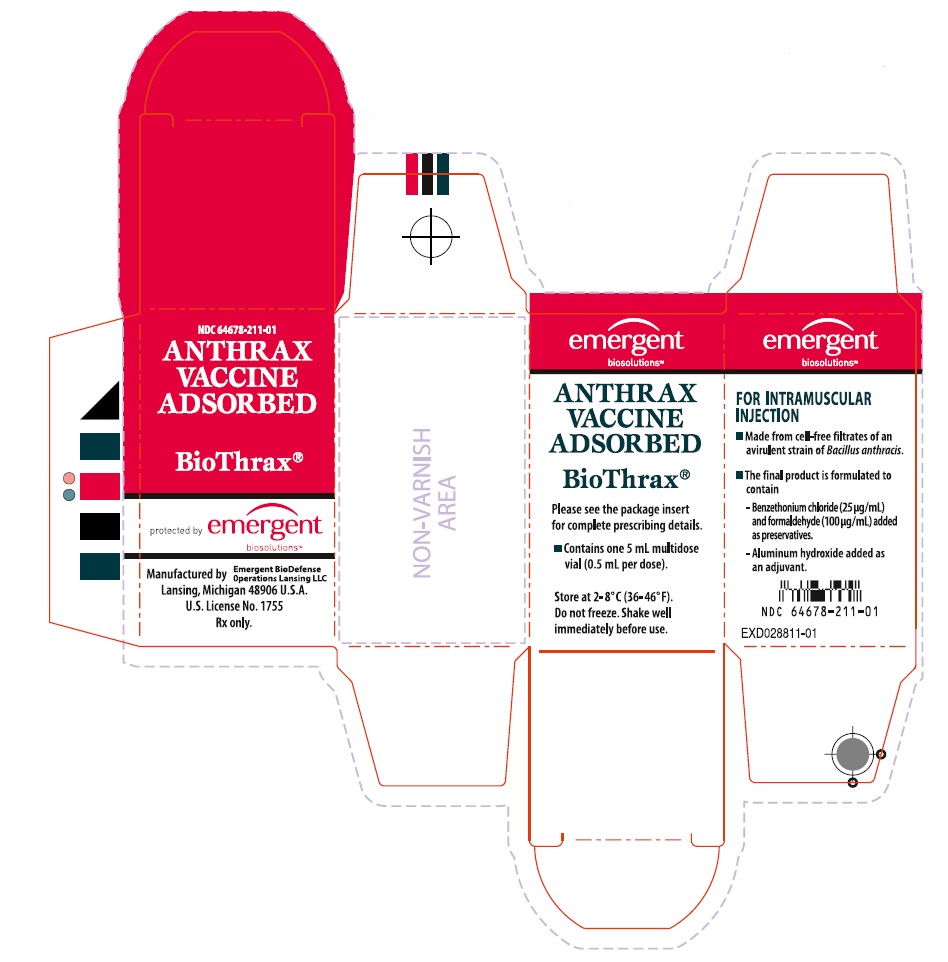
BioThrax is supplied in 5 mL multidose vials containing ten 0.5 mL doses.
NDC 64678-211-05 (vial), 64678-211-01 (carton)
17 PATIENT COUNSELING INFORMATION
See FDA-approved patient labeling (Patient Information).
Advise women of the potential risk to the fetus. Encourage women who are exposed to BioThrax during pregnancy to inform their healthcare provider and enroll in the BioThrax (Anthrax) Vaccine in Pregnancy Registry (Phone: 1-619-553-9255). [See Warnings and Precautions (5.3) and Use in Specific Populations (8.1)]
Inform patients of the benefits and risks of immunization with BioThrax.
Instruct patients to report any serious adverse reaction to their health care provider.
Manufactured by:
Emergent BioDefense Operations Lansing LLC
Lansing, MI 48906
US License No. 1755
BioThrax® is a registered trademark of Emergent BioDefense Operations Lansing LLC
-
Information for Patients
BioThrax® (Anthrax Vaccine Adsorbed)
Please read this Patient Information summary carefully before you get this shot. This summary does not take the place of talking with your healthcare provider about BioThrax. If you have questions or would like more information, please talk with your healthcare provider.
What is BioThrax?
- •
- BioThrax is a vaccine licensed by the FDA to protect against anthrax disease in persons 18 through 65 years of age:
- o
- It can be used before exposure to anthrax to protect people at high risk of getting the disease.
- o
- It can be used after exposure to anthrax, along with antibiotics, to protect people from getting the disease.
- •
- BioThrax may not protect all people who get the vaccine.
- •
- How well BioThrax works when given after exposure to anthrax has been studied only in animals. It has not been studied in humans because there are not enough people who get the disease naturally, and it is not ethical to expose people to anthrax on purpose to find out how well BioThrax works.
- •
- The safety of BioThrax was studied in healthy adults.
Who should not get BioThrax?
You should not get BioThrax if you have a history of severe allergic reaction to any ingredient of the vaccine, including aluminum hydroxide, benzethonium chloride, and formaldehyde or had a serious reaction after getting BioThrax previously .
What should I tell my healthcare provider before getting BioThrax?
- •
- If you may be pregnant, plan to get pregnant soon, or are nursing a baby.
- •
- About medicines that you take, including over-the-counter medicines and supplements.
- •
- About immune problems you have, including steroid treatments and cancer treatments.
- •
- About blood clotting problems or if you take “blood thinners.”
- •
- If you are allergic to latex.
What if I discover I was pregnant at the time I got BioThrax?
- •
- Inform your healthcare provider
- •
- You can enroll in the BioThrax (Anthrax) Vaccine in Pregnancy Registry (Phone: 1-619-553-9255), if eligible
How is BioThrax given?
BioThrax is given as a shot in your arm.
After getting the first shot, you should come back for the next shots on the schedule given to you by your health care provider. It is important that you get all your shots to get the best protection.
If you get BioThrax because you may have been exposed to anthrax, it is important that you also take antibiotics for 60 days.
What are the possible or reasonably likely side effects of BioThrax?
The most common side effects of BioThrax are:
- •
- Pain, tenderness, redness, bruising, or problems moving the arm in which you got the shot
- •
- Muscle aches
- •
- Headaches
- •
- Fatigue
- •
- Fainting
Tell your healthcare provider about any side effects that concern you. Your healthcare provider can give you a complete list of side effects available to healthcare professionals.
You may report side effects to FDA by calling 1-800-822-7967 or to the website www.vaers.hhs.gov. You may also report side effects directly to Emergent BioSolutions at 1-877-246-8472 or at productsafety@ebsi.com.
What are the ingredients in BioThrax?
BioThrax does not contain live bacteria. BioThrax contains non-infectious proteins, aluminum hydroxide, benzothonium chloride and formaldehyde (as preservatives).
The vial stopper contains natural rubber latex.
- Manufactured by Emergent BioDefense Operations Lansing LLC
Lansing, MI 48906, US
License No. 1755