DESCRIPTION
Each 100 mL of 5% Dextrose in Lactated Ringer's Injection contains:
Hydrous Dextrose USP 5 g; Sodium Chloride USP 0.6 g
Sodium Lactate 0.31 g; Potassium Chloride USP 0.03 g
Calcium Chloride Dihydrate USP 0.02 g
Water for Injection USP qs
pH adjusted with Hydrochloric Acid NF
pH: 4.6 (4.0–6.0)
Calories per liter: 170
Calculated Osmolarity: 530 mOsmol/liter, hypertonic
Concentration of Electrolytes (mEq/liter): Sodium 130; Potassium 4;
Calcium 3; Chloride 112; Lactate (CH3CH(OH)COO−) 28
5% Dextrose in Lactated Ringer's Injection is sterile, nonpyrogenic and contains no bacteriostatic or antimicrobial agents. This product is intended for intravenous administration.
The formulas of the active ingredients are:
| Ingredients | Molecular Formula | Molecular Weight |
|---|---|---|
| Sodium Chloride USP | NaCl | 58.44 |
| Sodium Lactate | CH3CH(OH)COONa | 112.06 |
| Potassium Chloride USP | KCl | 74.55 |
| Calcium Chloride Dihydrate USP | CaCl2•2H2O | 147.02 |
| Hydrous Dextrose USP | 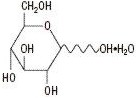 | 198.17 |
Not made with natural rubber latex, PVC or DEHP.
The plastic container is made from a multilayered film specifically developed for parenteral drugs. It contains no plasticizers and exhibits virtually no leachables. The solution contact layer is a rubberized copolymer of ethylene and propylene. The container is nontoxic and biologically inert. The container-solution unit is a closed system and is not dependent upon entry of external air during administration. The container is overwrapped to provide protection from the physical environment and to provide an additional moisture barrier when necessary.
Addition of medication should be accomplished using complete aseptic technique.
The closure system has two ports; the one for the administration set has a tamper evident plastic protector and the other is a medication addition site. Refer to the Directions for Use of the container.
CLINICAL PHARMACOLOGY
5% Dextrose in Lactated Ringer's Injection provides electrolytes and calories, and is a source of water for hydration. It is capable of inducing diuresis depending on the clinical condition of the patient. This solution also contains lactate which produces a metabolic alkalinizing effect.
Sodium, the major cation of the extracellular fluid, functions primarily in the control of water distribution, fluid balance and osmotic pressure of body fluids. Sodium is also associated with chloride and bicarbonate in the regulation of the acid-base equilibrium of body fluid. Potassium, the principal cation of intracellular fluid, participates in carbohydrate utilization and protein synthesis, and is critical in the regulation of nerve conduction and muscle contraction, particularly in the heart.
Chloride, the major extracellular anion, closely follows the metabolism of sodium, and changes in the acid-base balance of the body are reflected by changes in the chloride concentration. Calcium, an important cation, provides the framework of bones and teeth in the form of calcium phosphate and calcium carbonate. In the ionized form, calcium is essential for the functional mechanism of the clotting of blood, normal cardiac function, and regulation of neuromuscular irritability.
Sodium lactate is a racemic salt containing both the levo form, which is oxidized by the liver to bicarbonate, and the dextro form, which is converted to glycogen. Lactate is slowly metabolized to carbon dioxide and water, accepting one hydrogen ion and resulting in the formation of bicarbonate for the lactate consumed. These reactions depend on oxidative cellular activity.
Dextrose provides a source of calories. Dextrose is readily metabolized, may decrease losses of body protein and nitrogen, promotes glycogen deposition and decreases or prevents ketosis if sufficient doses are provided.
INDICATIONS AND USAGE
This solution is indicated for use in adults and pediatric patients as a source of electrolytes, calories and water for hydration.
CONTRAINDICATIONS
The use of 5% Dextrose in Lactated Ringer’s Injection is contraindicated in neonates (28 days of age or younger) receiving concomitant treatment with ceftriaxone, even if separate infusion lines are used, due to the risk of fatal ceftriaxone-calcium salt precipitation in the neonate’s bloodstream [see Warnings, Drug Interactions, Pediatric Use].
This solution is contraindicated where the administration of sodium, potassium, calcium, chloride or lactate could be clinically detrimental.
Lactate administration is contraindicated in severe metabolic acidosis or alkalosis, and in severe liver disease or anoxic states which affect lactate metabolism.
Solutions containing dextrose may be contraindicated in patients with hypersensitivity to corn products.
WARNINGS
Precipitation with Ceftriaxone
Precipitation of ceftriaxone-calcium can occur when ceftriaxone is mixed with calcium-containing solutions, such as 5% Dextrose in Lactated Ringer’s Injection, in the same intravenous administration line. Do not administer ceftriaxone simultaneously with 5% Dextrose in Lactated Ringer’s Injection via a Y-site.
Deaths have occurred in neonates (28 days of age or younger) who received concomitant intravenous calcium-containing solutions with ceftriaxone resulting from calcium-ceftriaxone precipitates in the lungs and kidneys, even when separate infusion lines were used. 5% Dextrose in Lactated Ringer’s Injection is contraindicated in neonates receiving ceftriaxone.
However, in patients other than neonates, ceftriaxone and 5% Dextrose in Lactated Ringer’s Injection may be administered sequentially if the infusion lines are thoroughly flushed between infusions with a compatible fluid. [see Contraindications, Warnings, Drug Interactions, Pediatric Use].
Solutions containing lactate are not for use in the treatment of lactic acidosis.
Solutions containing lactate should be used with great care in patients with metabolic or respiratory alkalosis, and in those conditions in which there is an increased level or an impaired utilization of lactate, such as severe hepatic insufficiency.
The administration of intravenous solutions can cause fluid and/or solute overload resulting in dilution of serum electrolyte concentrations, overhydration, congested states or pulmonary edema. The risk of dilutional states is inversely proportional to the electrolyte concentration. The risk of solute overload causing congested states with peripheral and pulmonary edema is directly proportional to the electrolyte concentration.
Solutions containing sodium ions should be used with great care, if at all, in patients with congestive heart failure, severe renal insufficiency, and in clinical states in which there is sodium retention with edema.
Solutions containing potassium ions should be used with great care, if at all, in patients with hyperkalemia, severe renal failure, and in conditions in which potassium ions retention is present.
In patients with diminished renal function, administration of solutions containing sodium or potassium ions may result in sodium or potassium retention.
Solutions containing calcium ions should not be administered through the same administration set as blood because of the likelihood of coagulation.
PRECAUTIONS
General
This solution should be used with care in patients with hypervolemia, renal insufficiency, urinary tract obstruction, or impending or frank cardiac decompensation.
Extraordinary electrolytes losses such as may occur during protracted nasogastric suction, vomiting, diarrhea or gastrointestinal fistula drainage may necessitate additional electrolyte supplementation.
Additional essential electrolytes, minerals and vitamins should be supplied as needed.
Sodium-containing solutions should be administered with caution to patients receiving corticosteroids or corticotropin, or to other salt-retaining patients.
Care should be exercised in administering solutions containing sodium or potassium to patients with renal or cardiovascular insufficiency, with or without congestive heart failure, particularly if they are postoperative or elderly.
The osmolarity of 5% Dextrose in Lactated Ringer’s Injection is 530 mOsmol/liter (calc). Administration of substantially hypertonic solutions may cause venous irritation, including phlebitis.
Solutions containing calcium should be used with caution in the presence of cardiac disease, particularly when accompanied by renal disease. Parenteral calcium should be administered with extreme caution to patients receiving digitalis preparations.
Solutions containing lactate should be used with caution. Excess administration may result in metabolic alkalosis.
The conversion of lactate to bicarbonate is markedly delayed in the presence of tissue anoxia and reduced capacity of the liver to metabolize lactate. This may occur under conditions such as metabolic acidosis associated with circulatory insufficiency, extracorporeal circulation, hypothermia, glycogen storage disease, liver dysfunction, respiratory alkalosis, shock or cardiac decompensation.
Solutions containing dextrose should be used with caution in patients with overt or known subclinical diabetes mellitus, or carbohydrate intolerance for any reason.
To minimize the risk of possible incompatibilities arising from mixing this solution with other additives that may be prescribed, the final infusate should be inspected for cloudiness or precipitation immediately after mixing, prior to administration, and periodically during administration.
Do not connect flexible plastic containers in series in order to avoid air embolism due to possible residual air contained in the primary container.
If administration is controlled by a pumping device, care must be taken to discontinue pumping action before the container runs dry or air embolism may result. If administration is not controlled by a pumping device, refrain from applying excessive pressure (greater than 300mmHg) causing distortion to the container such as wringing or twisting. Such handling could result in breakage of the container.
This solution is intended for intravenous administration using sterile equipment. It is recommended that intravenous administration apparatus be replaced at least once every 24 hours.
Use only if solution is clear and container and seals are intact.
Laboratory Tests
Clinical evaluation and periodic laboratory determinations are necessary to monitor changes in fluid balance, electrolyte concentrations, and acid-base balance during prolonged parenteral therapy or whenever the condition of the patient warrants such evaluation. Significant deviations from normal concentrations may require tailoring of the electrolyte pattern, in this or an alternative solution.
Drug Interactions
Ceftriaxone
Precipitation of ceftriaxone-calcium can occur when ceftriaxone is mixed with calcium-containing solutions, such as 5% Dextrose in Lactated Ringer’s Injection, in the same intravenous administration line. Do not administer ceftriaxone simultaneously with 5% Dextrose in Lactated Ringer’s Injection via a Y-site. However, in patients other than neonates, ceftriaxone and 5% Dextrose in Lactated Ringer’s Injection may be administered sequentially if the infusion lines are thoroughly flushed between infusions with a compatible fluid [see Warnings, Dosage and Administration].
Deaths have occurred in neonates (28 days of age or younger) who received concomitant intravenous calcium-containing solutions with ceftriaxone resulting from calcium-ceftriaxone precipitates in the lungs and kidneys, even when separate infusion lines were used [see Contraindications, Warnings, Pediatric Use, Dosage and Administration].
Some additives may be incompatible. Consult with pharmacist. When introducing additives, use aseptic techniques. Mix thoroughly. Do not store.
Carcinogenesis, Mutagenesis, Impairment of Fertility
Studies with 5% Dextrose in Lactated Ringer's Injection have not been performed to evaluate carcinogenic potential, mutagenic potential or effects on fertility.
Pregnancy: Teratogenic Effects
Animal reproduction studies have not been conducted with 5% Dextrose in Lactated Ringer's Injection. It is also not known whether 5% Dextrose in Lactated Ringer's Injection can cause fetal harm when administered to a pregnant woman or can affect reproduction capacity. 5% Dextrose in Lactated Ringer's Injection should be given to a pregnant woman only if clearly needed.
Labor and Delivery
The effects of 5% Dextrose in Lactated Ringer's Injection on the duration of labor or delivery, on the possibility that forceps delivery or other intervention or resuscitation of the newborn will be necessary, and on the later growth, development, and functional maturation of the child are unknown.
As reported in the literature, 5% Dextrose in Lactated Ringer's Injection has been administered during labor and delivery. Caution should be exercised, and the fluid balance, glucose and electrolyte concentrations, and acid-base balance, of both mother and fetus should be evaluated periodically or whenever warranted by the condition of the patient or fetus.
Nursing Mothers
It is not known whether this drug is excreted in human milk. Because many drugs are excreted in human milk, caution should be exercised when 5% Dextrose in Lactated Ringer's Injection is administered to a nursing woman.
Pediatric Use
Deaths have occurred in neonates (28 days of age or younger) who received concomitant intravenous calcium-containing solutions with ceftriaxone resulting from calcium-ceftriaxone precipitates in the lungs and kidneys, even when separate infusion lines were used. 5% Dextrose in Lactated Ringer’s Injection is contraindicated in neonates receiving ceftriaxone [see Contraindications, Warnings, Drug Interactions].
Safety and effectiveness of 5% Dextrose in Lactated Ringer's Injection in pediatric patients has not been established by adequate and well-controlled studies. However, as referenced in the medical literature, potassium chloride injection has been used to treat pediatric patients with potassium deficiency when oral replacement therapy is not feasible.
For patients receiving potassium supplement at greater than maintenance rates, frequent monitoring of serum potassium levels and serial EKGs are recommended.
Dextrose is safe and effective for the stated indications in pediatric patients (see INDICATIONS AND USAGE). As reported in the literature, the dosage selection and constant infusion rate of intravenous dextrose must be selected with caution in pediatric patients, particularly neonates and low birth weight infants, because of the increased risk of hyperglycemia/hypoglycemia. Frequent monitoring of serum glucose concentrations is required when dextrose is prescribed to pediatric patients, particularly neonates and low birth weight infants.
In neonates or in very small infants even small volumes of fluid may affect fluid and electrolyte balance. Care must be exercised in treatment of neonates, especially pre-term neonates, whose renal function may be immature and whose ability to excrete fluid and solute loads may be limited. Fluid intake, urine output, and serum glucose and electrolytes should be monitored closely.
See WARNINGS and DOSAGE AND ADMINISTRATION.
Geriatric Use
Clinical studies of 5% Dextrose in Lactated Ringer's Injection did not include sufficient numbers of subjects aged 65 and over to determine whether they respond differently from younger subjects. Other reported clinical experience has not identified differences in responses between elderly and younger patients.
In general, dose selection for an elderly patient should be cautious, usually starting at the low end of the dosing range, reflecting the greater frequency of decreased hepatic, renal, or cardiac function, and of concomitant disease or other drug therapy.
This drug is known to be substantially excreted by the kidney, and the risk of toxic reactions to this drug may be greater in patients with impaired renal function. Because elderly patients are more likely to have decreased renal function, care should be taken in dose selection, and it may be useful to monitor renal function.
See WARNINGS.
ADVERSE REACTIONS
Reactions which may occur because of the solution or the technique of administration include febrile response, infection at the site of injection, venous thrombosis or phlebitis extending from the site of injection, extravasation and hypervolemia.
Too rapid infusion of hypertonic solutions may cause local pain and venous irritation. Rate of administration should be adjusted according to tolerance. Use of the largest peripheral vein and a small bore needle is recommended. (See DOSAGE AND ADMINISTRATION.)
Symptoms may result from an excess or deficit of one or more of the ions present in the solution; therefore, frequent monitoring of electrolyte levels is essential.
Hypernatremia may be associated with edema and exacerbation of congestive heart failure due to the retention of water, resulting in an expanded extracellular fluid volume.
Reactions reported with the use of potassium-containing solutions include nausea, vomiting, abdominal pain and diarrhea. The signs and symptoms of potassium intoxication include paresthesias of the extremities, areflexia, muscular or respiratory paralysis, mental confusion, weakness, hypotension, cardiac arrhythmias, heart block, electrocardiographic abnormalities and cardiac arrest. Potassium deficits result in disruption of neuromuscular function, and intestinal ileus and dilatation.
If infused in large amounts, chloride ions may cause a loss of bicarbonate ions, resulting in an acidifying effect.
Abnormally high plasma levels of calcium can result in depression, amnesia, headaches, drowsiness, disorientation, syncope, hallucinations, hypotonia of both skeletal and smooth muscles, dysphagia, arrhythmias and coma. Calcium deficits can result in neuromuscular hyperexcitability, including cramps and convulsions.
Although the metabolism of lactate to bicarbonate is a relatively slow process, aggressive administration of sodium lactate may result in metabolic alkalosis. Careful monitoring of blood acid-base balance is essential during the administration of sodium lactate.
The physician should also be alert to the possibility of adverse reactions to drug additives. Prescribing information for drug additives to be administered in this manner should be consulted.
If an adverse reaction does occur, discontinue the infusion, evaluate the patient, institute appropriate therapeutic countermeasures and save the remainder of the fluid for examination if deemed necessary.
Other manifestations of hypersensitivity/infusion reactions: decreased heart rate, tachycardia, blood pressure decreased, respiratory distress, laryngeal edema, flushing, throat irritation, paresthesias, hypoesthesia oral, dysgeusia, anxiety, headache, and sneezing.
Hyperkalemia
Hypervolemia
Other infusion site reactions: infection at the site of injection, phlebitis, extravasation, infusion site inflammation, infusion site swelling, infusion site rash, infusion site pain, infusion site burning.
OVERDOSAGE
In the event of a fluid or solute overload during parenteral therapy, reevaluate the patient's condition and institute appropriate corrective treatment.
DOSAGE AND ADMINISTRATION
This solution is for intravenous use only.
Dosage is to be directed by a physician and is dependent upon age, weight, clinical condition of the patient and laboratory determinations. Frequent laboratory determinations and clinical evaluation are essential to monitor changes in blood glucose and electrolyte concentrations, and fluid and electrolyte balance during prolonged parenteral therapy.
When a hypertonic solution is to be administered peripherally, it should be slowly infused through a small bore needle, placed well within the lumen of a large vein to minimize venous irritation. Carefully avoid infiltration.
Fluid administration should be based on calculated maintenance or replacement fluid requirements for each patient.
The presence of calcium ions in this solution should be considered when phosphate is present in additive solutions, in order to avoid precipitation.
Some additives may be incompatible. Consult with pharmacist. When introducing additives, use aseptic techniques. Mix thoroughly. Do not store.
Parenteral drug products should be inspected visually for particulate matter and discoloration prior to administration, whenever solution and container permit.
Ceftriaxone must not be administered simultaneously with calcium-containing intravenous solutions such as 5% Dextrose in Lactated Ringer’s Injection via a Y-site. However, in patients other than neonates, ceftriaxone and 5% Dextrose in Lactated Ringer’s Injection may be administered sequentially if the infusion
lines are thoroughly flushed between infusions with a compatible fluid [see Contraindications, Warnings, Drug Interactions, Pediatric Use].
Pediatric Use
There is no specific pediatric dose. The dose is dependent on weight, clinical condition and laboratory results. See WARNINGS and PRECAUTIONS.
HOW SUPPLIED
5% Dextrose in Lactated Ringer's Injection is supplied sterile and nonpyrogenic in EXCEL® Containers. The 1000 mL containers are packaged 12 per case and the 500 mL containers are packaged 24 per case.
| NDC | REF | Size |
|---|---|---|
| 5% Dextrose in Lactated Ringer's Injection | ||
| 0264-7751-00 | L7510 | 1000 mL |
| 0264-7751-10 | L7511 | 500 mL |
Directions for Use of EXCEL Container
Caution: Do not use plastic containers in series connection.
To Open
Tear overwrap down at notch and remove solution container. Check for minute leaks by squeezing solution container firmly. If leaks are found, discard solution as sterility may be impaired. If supplemental medication is desired, follow directions below before preparing for administration.
NOTE: Before use, perform the following checks:
Inspect each container. Read the label. Ensure solution is the one ordered and is within the expiration date.
Invert container and carefully inspect the solution in good light for cloudiness, haze, or particulate matter. Any container which is suspect should not be used.
Use only if solution is clear and container and seals are intact.
Preparation for Administration
- Remove plastic protector from sterile set port at bottom of container.
- Attach administration set. Refer to complete directions accompanying set.
To Add Medication
Warning: Some additives may be incompatible.
To Add Medication Before Solution Administration
- Prepare medication site.
- Using syringe with 18–22 gauge needle, puncture medication port and inner diaphragm and inject.
- Squeeze and tap ports while ports are upright and mix solution and medication thoroughly.
To Add Medication During Solution Administration
- Close clamp on the set.
- Prepare medication site.
- Using syringe with 18–22 gauge needle of appropriate length (at least 5/8 inch), puncture resealable medication port and inner diaphragm and inject.
- Remove container from IV pole and/or turn to an upright position.
- Evacuate both ports by tapping and squeezing them while container is in the upright position.
- Mix solution and medication thoroughly.
- Return container to in use position and continue administration.
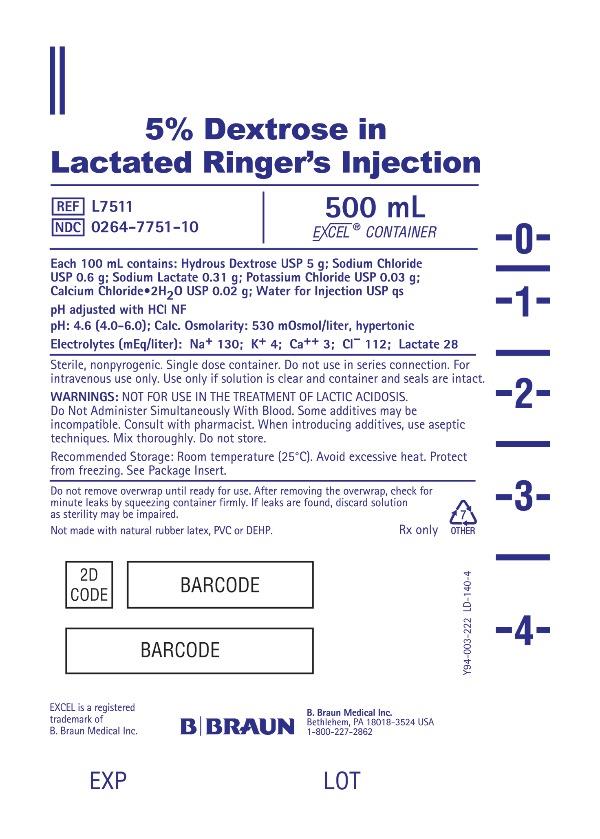
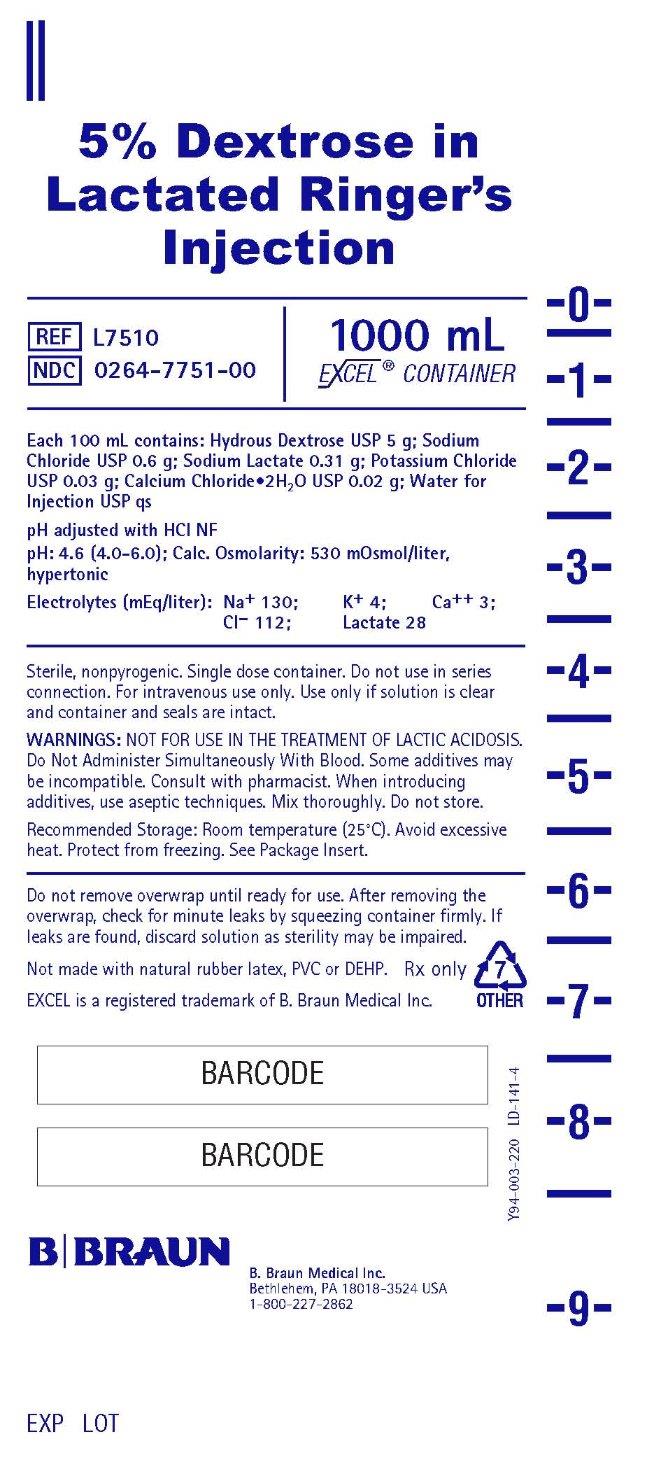
PRINCIPAL DISPLAY PANEL - 1000 mL Container Label
5% Dextrose in
Lactated Ringer's
Injection
REF L7510
NDC 0264-7751-00
1000 mL
EXCEL® CONTAINER
Each 100 mL contains: Hydrous Dextrose USP 5 g; Sodium
Chloride USP 0.6 g; Sodium Lactate 0.31 g; Potassium Chloride
USP 0.03 g; Calcium Chloride•2H2O USP 0.02 g; Water for
Injection USP qs
pH adjusted with HCl NF
pH: 4.6 (4.0-6.0); Calc. Osmolarity: 530 mOsmol/liter,
hypertonic
Electrolytes (mEq/liter): Na+ 130; K+ 4; Ca++ 3;
Cl– 112; Lactate 28
Sterile, nonpyrogenic. Single dose container. Do not use in series
connection. For intravenous use only. Use only if solution is clear
and container and seals are intact.
WARNINGS: NOT FOR USE IN THE TREATMENT OF LACTIC ACIDOSIS.
Do Not Administer Simultaneously With Blood. Some additives may
be incompatible. Consult with pharmacist. When introducing
additives, use aseptic techniques. Mix thoroughly. Do not store.
Recommended Storage: Room temperature (25°C). Avoid excessive
heat. Protect from freezing. See Package Insert.
Do not remove overwrap until ready for use. After removing the
overwrap, check for minute leaks by squeezing container firmly. If
leaks are found, discard solution as sterility may be impaired.
Not made with natural rubber latex, PVC or DEHP.
Rx only

EXCEL is a registered trademark of B. Braun Medical Inc.
B. Braun Medical Inc.
Bethlehem, PA 18018-3524 USA
1-800-227-2862
Y94-003-220 LD-141-4
EXP
LOT
PRINCIPAL DISPLAY PANEL - 500 mL Container Label
5% Dextrose in
Lactated Ringer's Injection
REF L7511
NDC 0264-7751-10
500 mL
EXCEL® CONTAINER
Each 100 mL contains: Hydrous Dextrose USP 5 g; Sodium Chloride
USP 0.6 g; Sodium Lactate 0.31 g; Potassium Chloride USP 0.03 g;
Calcium Chloride•2H2O USP 0.02 g; Water for Injection USP qs
pH adjusted with HCl NF
pH: 4.6 (4.0-6.0); Calc. Osmolarity: 530 mOsmol/liter, hypertonic
Electrolytes (mEq/liter): Na+ 130; K+ 4; Ca++ 3; Cl– 112; Lactate 28
Sterile, nonpyrogenic. Single dose container. Do not use in series connection. For
intravenous use only. Use only if solution is clear and container and seals are intact.
WARNINGS: NOT FOR USE IN THE TREATMENT OF LACTIC ACIDOSIS.
Do Not Administer Simultaneously With Blood. Some additives may be
incompatible. Consult with pharmacist. When introducing additives, use aseptic
techniques. Mix thoroughly. Do not store.
Recommended Storage: Room temperature (25°C). Avoid excessive heat. Protect
from freezing. See Package Insert.
Do not remove overwrap until ready for use. After removing the overwrap, check for
minute leaks by squeezing container firmly. If leaks are found, discard solution
as sterility may be impaired.
Not made with natural rubber latex, PVC or DEHP.
Rx only

EXCEL is a registered trademark of B. Braun Medical Inc.
B. Braun Medical Inc.
Bethlehem, PA 18018-3524 USA
1-800-227-2862
Y94-003-222
LD-140-4
EXP
LOT